
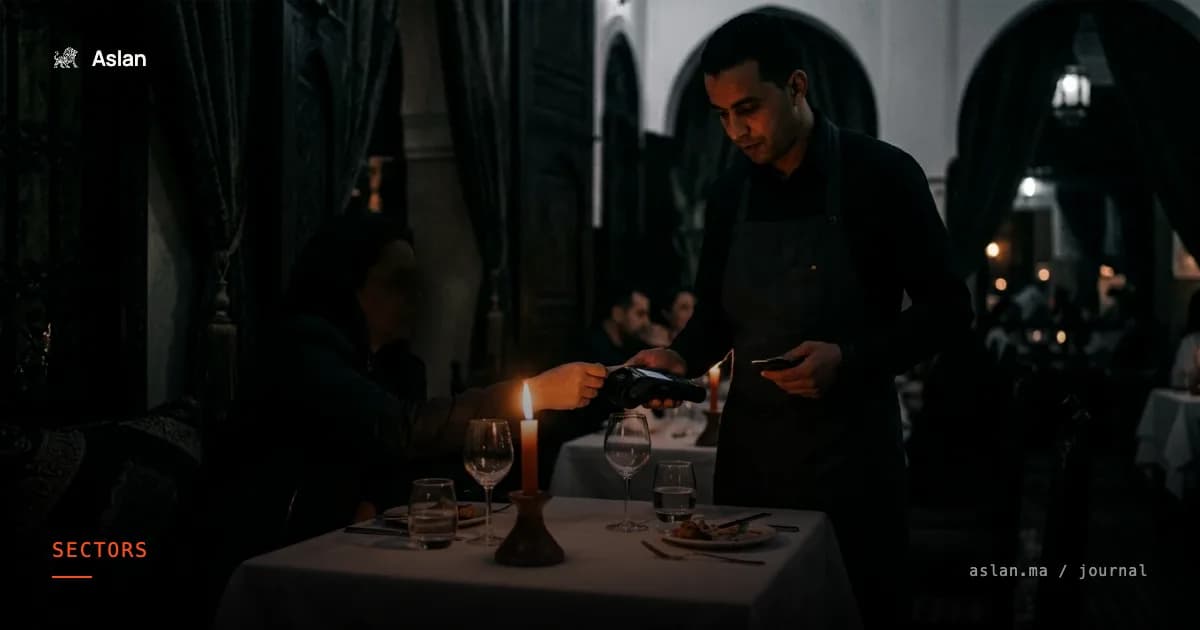
Why Moroccan Restaurants Need to Go Digital with Payments
The restaurant sector in Morocco represents a major pillar of the national economy. With over 120,000 cafes and restaurants across the Kingdom, this sector generates billions of dirhams in annual revenue. Yet, the vast majority of these establishments still operate exclusively in cash.
In 2026, this reality is changing rapidly. Moroccan consumers, particularly young urbanites, increasingly demand the ability to pay by card or phone. Restaurateurs who don't adopt digital payments risk losing a growing clientele that prefers cashless transactions.
The Numbers That Speak
- 67% of Moroccans under 35 prefer cashless payments when available
- 35% average increase in ticket size when a restaurant accepts digital payments
- 23% reduction in cash register errors with automated POS systems
- 45 minutes less per day spent on cash management
5 Steps to Adopt Digital Payments in Your Restaurant
Step 1: Assess Your Needs and Choose Your Solution
Before equipping yourself, analyze your business to identify the most suitable solution:
For a small cafe (under 50 seats):
- A mobile payment terminal (mPOS) connected to your smartphone may suffice
- QR code payment is an economical alternative requiring no additional hardware
- Budget: from MAD 200/month
For a medium restaurant (50-150 seats):
- A fixed POS system with cash management, receipt printing, and touchscreen
- Budget: MAD 500-1,500/month
For a large restaurant or chain:
- A complete POS system with multi-register management, kitchen, bar, and terrace
- Integration with inventory management and accounting software
- Budget: MAD 1,500-5,000/month
Step 2: Equip Your Establishment
The Aslan POS, for example, runs on Sunmi terminals specifically designed for F&B. These devices combine:
- Touchscreen: Intuitive interface for order taking
- Built-in printer: Receipt and kitchen ticket printing
- Card reader: Acceptance of Moroccan and international bank cards
- QR code scanner: Mobile wallet payments
- Connectivity: WiFi and 4G to operate even during internet outages
Step 3: Configure Restaurant-Specific Features
Menu management: Create categories, add items with prices, options, and supplements.
Split bill: An essential feature in Morocco, where groups frequently share the check. The POS must allow equal splitting, per-item attribution, and mixed payment methods per table.
Tip management: Suggested tip percentages on the terminal, per-server tracking, and automatic distribution.
Kitchen tickets: Automatic order routing to kitchen printers with timestamps for prep optimization.
Step 4: Launch and Communicate
- Week 1: Run in parallel with your old system
- Week 2: Transition to the new system as primary, old system as backup
- Week 3: Exclusive use of the new system
Communicate to your customers: display accepted payment methods at the entrance and on menus, place QR codes on tables, and announce on social media that you now accept cashless payments.
Step 5: Optimize and Analyze
A digital POS is not just for taking payments — it is a business intelligence tool. Use the data to analyze sales, manage inventory, and monitor team performance.
The Aslan POS: Built for Moroccan Cafes and Restaurants
Aslan offers a smart POS terminal specially adapted for Morocco's restaurant sector, running on Sunmi P2 and P3 terminals:
- 30-minute setup: Quick configuration without a technician
- French and Arabic interface: Adapted to the Moroccan context
- Complete menu management: Categories, options, supplements, set menus
- Split bill and tips: Essential restaurant features
- Automatic kitchen tickets: Smooth coordination between floor and kitchen
- Real-time reports: Track sales, inventory, and staff from your smartphone
- Wallet connection: Receipts credited directly to your Aslan professional account
By integrating POS with the Aslan professional wallet, restaurateurs benefit from a unified treasury view — receipts, supplier expenses, and invoicing are centralized on a single platform.
FAQ
How much does a POS system cost for a cafe in Morocco?
Cost depends on the solution chosen. For a small cafe, expect MAD 200-500/month for a mobile payment terminal. For a complete POS system with cash management and kitchen tickets, budget MAD 500-1,500/month. Solutions like Aslan offer all-in-one packages including hardware and software.
Does the POS work without internet?
Good POS systems like Aslan's are designed to work offline. You can continue taking orders and accepting cash payments. Card transactions are queued and processed automatically when the internet connection returns.
Do I need a professional bank account to accept card payments?
Traditionally yes, with a card acceptance contract from CMI. However, fintech solutions like Aslan simplify this by integrating payment acceptance directly into their professional wallet, without requiring a separate banking contract.
Will digital payments replace cash in Moroccan restaurants?
Not in the short term. Cash remains important in Moroccan culture. The goal is to offer choice to customers. Restaurants that accept both cash and digital payments capture a wider clientele and increase their revenue. The trend toward digital is accelerating, especially among young urban consumers.