
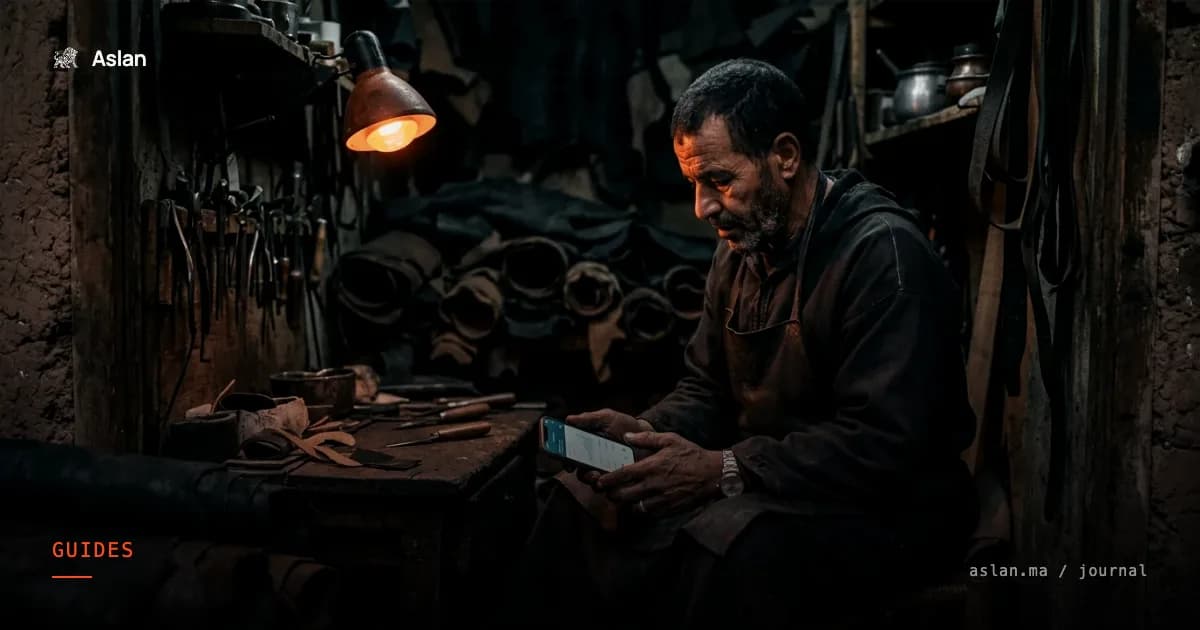
The Auto-Entrepreneur Status in Morocco: A Gateway to Simple Entrepreneurship
Since its creation in 2015, the auto-entrepreneur status in Morocco has transformed the Kingdom's entrepreneurial landscape. In 2026, over 500,000 Moroccans operate under this simplified regime, which enables launching a professional activity without the administrative burdens of a traditional company. Whether you're a freelance developer in Casablanca, an artisan in Marrakech, or a consultant in Rabat, this guide walks you through every financial aspect of your business.
What Is the Auto-Entrepreneur Status in Morocco?
The auto-entrepreneur status is a simplified legal framework established by Law 114-13, designed for individuals engaged in industrial, commercial, or artisanal activities, or providing services. It is managed by the National Registry of Auto-Entrepreneurs (RNAE) under Barid Al-Maghrib.
Eligibility Requirements
- Nationality: Moroccan or foreign resident under specific conditions
- Activity: Must be listed in the eligible activities catalog
- Annual turnover: Must not exceed MAD 500,000 for commercial, industrial, and artisanal activities, or MAD 200,000 for services
- Age: Must be 18 or older
Key Advantages
- Free registration, 100% online via the RNAE portal
- No minimum share capital required
- Ultra-simplified accounting: a simple revenue ledger suffices
- Access to mandatory health insurance (AMO)
- Legal invoicing capability
Taxation: What You Need to Know in 2026
One of the most attractive features of the auto-entrepreneur status is its favorable tax regime. Unlike companies subject to corporate tax or professional income tax, auto-entrepreneurs benefit from a simple flat-rate system.
Tax Rates
- 1% of turnover for commercial, industrial, and artisanal activities
- 2% of turnover for service providers
These rates apply to gross collected revenue with no expense deductions. Payments are made quarterly through Barid Al-Maghrib or online.
Mandatory Declarations
Auto-entrepreneurs must file a quarterly turnover declaration, even when turnover is zero. Failure to comply for four consecutive quarters leads to automatic deregistration.
Aslan Tip: Use the Aslan app to track your collections in real time and prepare your quarterly declarations stress-free. Our dashboards show exactly how much tax you need to set aside.
Banking: Why a Dedicated Account Is Essential
While the law does not formally require auto-entrepreneurs to open a professional bank account, separating your personal and business finances is essential practice.
The Aslan Auto-Entrepreneur Account
Aslan offers a professional account with a Moroccan IBAN specifically designed for auto-entrepreneurs. Without the traditional banking fees that erode your margins, your Aslan account provides:
- A dedicated IBAN for receiving professional payments
- Instant transfers to any bank account in Morocco
- Automatically categorized transaction history
- Accounting data exports compatible with accounting software
- Bill payments and services directly from the app
Invoicing: Rules to Follow
Every auto-entrepreneur in Morocco must issue compliant invoices for each service or sale, including all legally required information such as RNAE number, ICE identifier, and the VAT exemption notice. With Morocco's progressive transition toward electronic invoicing, it is essential to prepare now by adopting digital invoicing tools.
Payment Acceptance: Diversify Your Channels
In 2026, Moroccan customers use multiple payment methods. Your ability to accept various payment modes directly impacts your revenue.
- Bank transfer: Share your Aslan IBAN for B2B payments or large amounts
- QR code payment: Generate a QR code from your Aslan app for instant client payments
- Payment link: Send a link via WhatsApp or email for remote payments
- Cash: Still dominant in Morocco, with deposit options at Aslan partner points
For more on integrating digital payments, read our article on e-commerce and online payments in Morocco.
Growth Strategies for Auto-Entrepreneurs
1. Master Your Cash Flow
Use Aslan's analytics tools to monitor cash flow in real time. Identify slow periods and build a safety reserve equal to 3 months of expenses.
2. Professionalize Your Invoicing
Clear, professional invoices strengthen your image. Standardize templates and define clear payment terms.
3. Diversify Revenue Sources
Avoid depending on a single client. Aim for a portfolio where no client represents more than 30% of your turnover.
4. Plan Your Transition to a Company
If your turnover approaches the thresholds (MAD 500,000 or 200,000 depending on activity), prepare your transition to an SARL or SAS. The structured accounting you'll have established will facilitate this evolution.
FAQ: Auto-Entrepreneur in Morocco
Can I be an auto-entrepreneur and an employee at the same time?
Yes, combining both is permitted in Morocco, provided you respect any non-compete clauses in your employment contract.
What is the registration cost for auto-entrepreneur status?
Registration is completely free and done online in minutes through the RNAE portal.
Are auto-entrepreneurs subject to VAT?
No, auto-entrepreneurs benefit from full VAT exemption. They don't charge VAT to clients and cannot recover it on professional purchases.
How do I transition from auto-entrepreneur to SARL?
The transition requires creating an SARL at the commercial court, deregistering from RNAE, and transferring your activity. Working with an accountant is recommended for optimal tax planning.
Can I open an Aslan account as an auto-entrepreneur?
Absolutely. Aslan offers an account with a Moroccan IBAN tailored to auto-entrepreneur needs: fast registration, reduced fees, and integrated management tools.